Friday, November 26, 2010

How Scientific is Education Research? ; Gender and Cognition

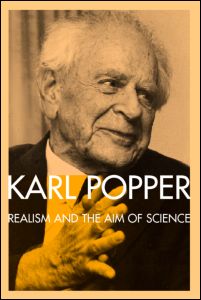
How scientific is education research? Not very, according to some critics. In this article E. Hyslop-Margison, an education philosopher claims that "logically invalid hypotheses...insulated from academic criticism" weaken much education research. One of his arguments is derived from the principle of "falsifiability" made famous by Karl Popper the 20th century's foremost philosopher of science. Popper severely damaged the "positivist" approach which underlies much social science research by showing that empirical verification is not logically based.

An example of the contentious nature of research underlying some educational thought can be illustrated by this article, actually a debate between two social scientists. Steven Pinker and Elizabeth Spelke, both eminent Harvard cognitive psychologists, have diametrically opposed viewpoints on gender studies that underlie some of the current thinking about gender-based educational instruments. Pinker supports the contention that there are innate gender differences in basic human cognition and Spelke is adamant that there are not. You pay your money, you take your choice.